

Automation built from the inside out
The founding team spent running automation projects on active production lines before starting Rodril. They encountered the same gap repeatedly: vendor claims that did not hold under real operating conditions.
Rodril was built to close that gap — a system designed by people who had to live with the consequences of failed deployments, not by generalists working from requirements documents.
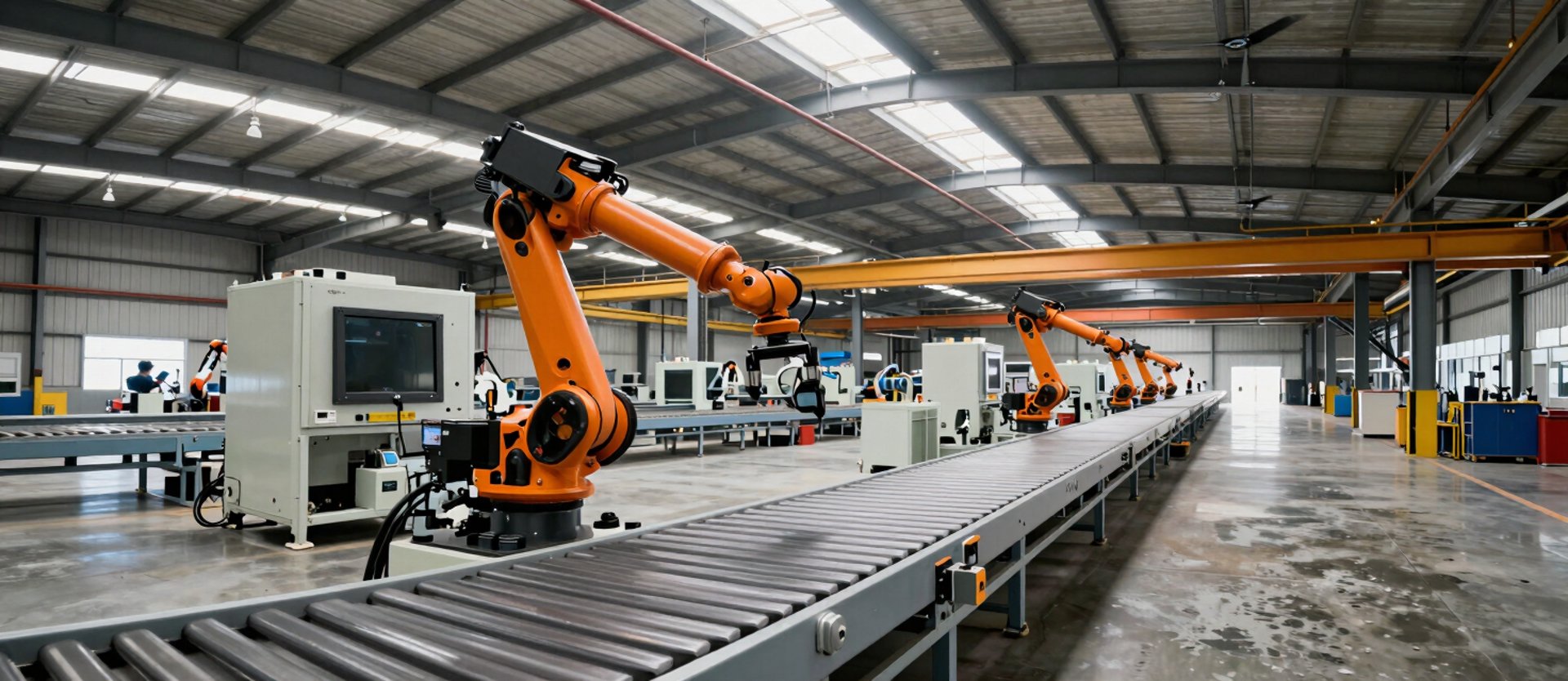
Disciplines that come from doing, not studying
Designed from the ground up for modern development workflows, Rodril operates on a highly modular, agentic framework. It serves as the ultimate physical endpoint for cognitive architectures, fitting naturally into programmatic pipelines where AI assistants manage complex logic. Instead of just generating text or compiling code, your AI can now reach out and interact with the physical world. With an extensible design that allows for continuous cognitive upgrades, Rodril future-proofs your hardware, ensuring that as generative AI models evolve, your robotic capabilities evolve right alongside them.
Every claim carries a measurement behind it
Verifiable by design
Narrow scope, deep coverage
Nothing in our documentation is an estimate or a best-case projection. Performance figures come from logged operational data in specific environments — conditions we name, not conditions we choose.
Rodril operates in a defined set of deployment environments. That constraint is deliberate — it lets us maintain accurate performance data and respond to edge cases that a broad-coverage product cannot anticipate.